



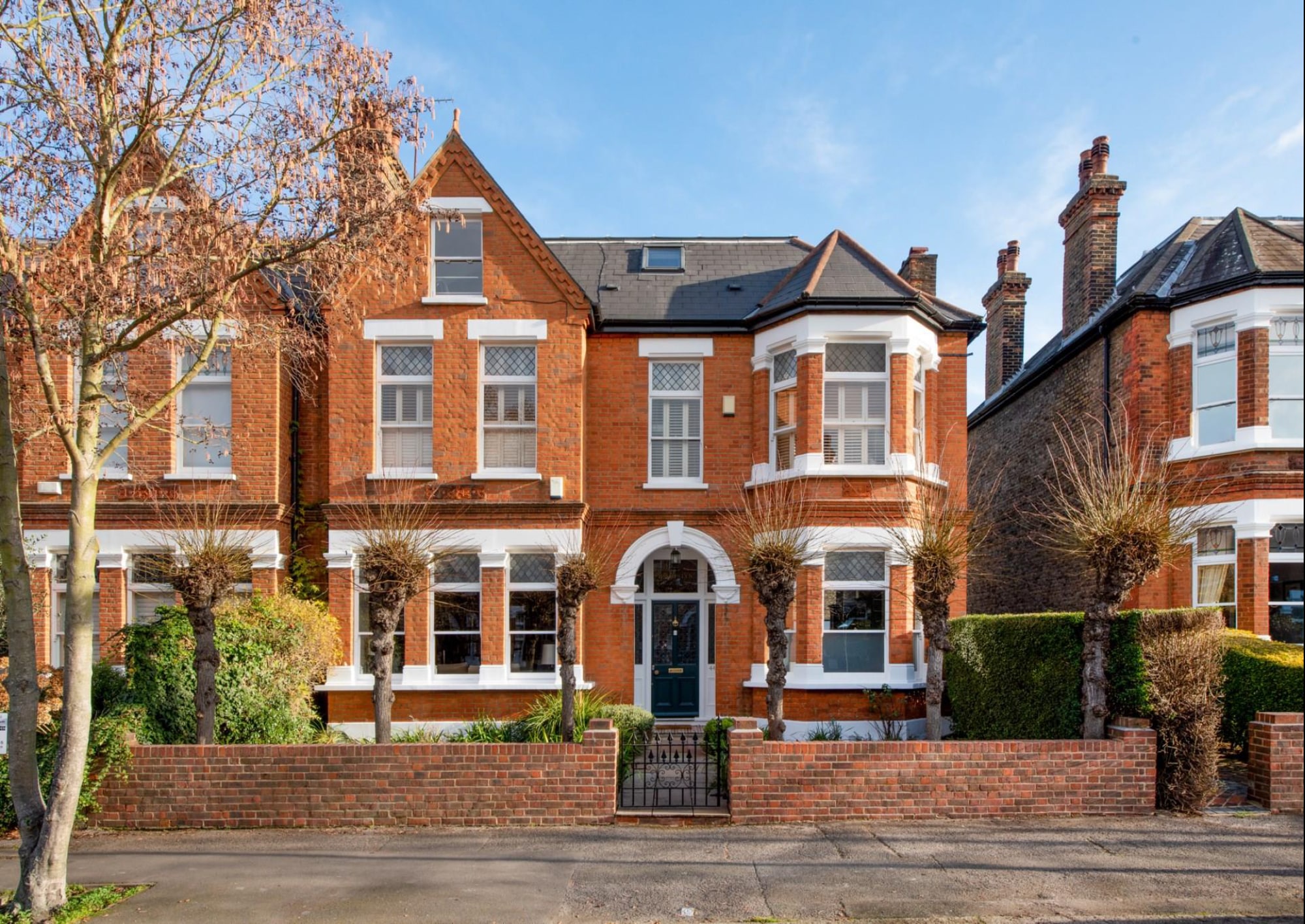
Dulwich is one of south east London’s most remarkable neighbourhoods. Its leafy streets, conservation areas and extraordinary concentration of Victorian and Edwardian properties give it a character that is genuinely unlike anywhere else in the city. For homeowners fortunate enough to own one of these properties the appeal is obvious. The proportions, the craftsmanship, the period detail and the sense of permanence that comes with a building that has stood for well over a hundred years.But a Victorian home renovation in Dulwich is not a straightforward undertaking.
These properties were built to different standards, with different materials and for a different way of life. Bringing them sensitively into the twenty first century, while preserving everything that makes them worth preserving, requires a specific kind of knowledge, patience and skill that not every builder possesses.
At SM & Sons Construction we work with a carefully selected number of homeowners across Dulwich, Herne Hill, West Norwood and the surrounding areas each year. Victorian renovations are among the most rewarding projects we take on. They are also among the most complex. This guide sets out the real challenges these properties present and the solutions that experienced builders apply to overcome them.
Why Victorian Properties in Dulwich Are Special
Before getting into the challenges it is worth understanding what makes these buildings worth the effort. Victorian properties in Dulwich, whether the grand detached villas of Dulwich Village, the substantial semi-detached houses of East Dulwich or the elegant terraces of Herne Hill, share a set of qualities that simply cannot be replicated in modern construction.
Ceiling heights of three metres or more at ground floor create a sense of space and grandeur that transforms how a room feels to inhabit. Original plaster cornicing and ceiling roses, when intact and properly restored, represent a level of craftsmanship that no modern equivalent approaches. Timber sash windows with their characterful glazing bars, solid timber floors with their natural grain and patina, original fireplaces and chimney breasts, ornate tiled hallway floors, each of these elements contributes to an atmosphere that is irreplaceable.
The challenge of a Victorian home renovation in Dulwich is not simply technical. It is philosophical. Every decision involves a judgement about what to preserve, what to restore, what to adapt and what to introduce that belongs alongside the existing fabric. Getting that balance right is what separates a renovation that enhances a Victorian property from one that diminishes it.
Victorian Home Renovation in Dulwich:
Challenge One: Damp and Moisture Management
Damp is the most common problem encountered in Victorian properties in Dulwich and across south London generally. Victorian buildings were designed to breathe. Their solid brick walls, lime mortar joints, timber floors and lime plaster walls work together as a system that allows moisture to move through the fabric of the building and evaporate. This system worked well for over a hundred years, until the twentieth century introduced materials that interrupt it.
The most damaging intervention has been the widespread use of cement pointing, cement render and impermeable modern paints on Victorian masonry. These materials trap moisture inside the wall rather than allowing it to escape, leading to the damp problems that affect so many Victorian properties today. The solution is often the opposite of what homeowners expect, not adding more impermeable barriers but removing them and restoring the building’s ability to breathe.
The solution
Before any cosmetic renovation work begins a thorough damp investigation is essential. This means understanding the difference between rising damp, penetrating damp, interstitial condensation and residual construction moisture. Each has different causes and different solutions and treating the wrong one wastes money while leaving the actual problem unaddressed.
Where cement pointing or render has been applied to the exterior the right solution is almost always to remove it and repoint with a suitable lime mortar mix that allows the wall to breathe again. Internally lime plaster should be used rather than gypsum on solid brick walls. Breathable insulation systems designed specifically for solid wall construction should be used in preference to impermeable rigid foam boards. Breathable paints on walls allow moisture to escape rather than trapping it beneath the surface.
A Victorian building restored to its intended breathable construction will manage moisture far more effectively than one that has been treated with impermeable products in a misguided attempt to make it damp proof.
Challenge Two: Solid Wall Insulation
Victorian properties were built with solid brick walls rather than the cavity walls that became standard in the twentieth century. A solid brick wall, typically nine inches of brickwork, has very poor thermal performance by modern standards, and improving it without damaging the property or falling foul of conservation area restrictions requires careful thought.
The two options for improving the thermal performance of a solid wall are internal insulation and external insulation. Both come with significant trade-offs.
External wall insulation wraps the building in an insulation layer on the outside, which is thermally effective and avoids reducing the internal floor area. However in Dulwich’s conservation areas external insulation is almost never acceptable from a planning perspective because it changes the external appearance and profile of the building. It also covers and potentially damages any external decorative features.
Internal wall insulation preserves the external appearance but reduces the internal floor area of every room in the property, moves the thermal mass of the wall to the cold side which can affect how the building manages moisture, and requires careful detailing at every junction, at floors, ceilings, window reveals and door openings, to avoid cold bridging and condensation problems.
The solution
For most Victorian properties in Dulwich conservation areas internal insulation is the only realistic option. The key is to use a system designed for historic buildings rather than a standard modern insulation product. Slim profile insulation boards with an integrated vapour open membrane, or natural insulation materials such as wood fibre board, perform well in solid wall applications while maintaining the building’s ability to manage moisture. Detailing at junctions must be meticulous. A well-insulated wall with poorly detailed reveals achieves far less than the specification suggests and creates localised cold bridging that leads to condensation.
The honest truth about Victorian solid wall insulation is that dramatic improvements in U-value are not always achievable without unacceptable compromises elsewhere. A well-considered partial improvement combined with excellent draughtproofing at windows, doors and floors often delivers more comfort improvement per pound than an ambitious insulation programme that creates other problems.
Challenge Three: Original Timber Floors
Victorian timber floors are one of the most valued features of period properties in Dulwich. The boards themselves, wide, solid and often with a beautiful natural grain, are irreplaceable. But they present challenges. They are rarely flat, they are often draughty, and they creak. And levelling them for new floor finishes without destroying their character requires skill and patience.
The instinct to simply cover a Victorian timber floor with a new screed or overlayment and lay modern flooring on top destroys one of the most significant original features of the property. Equally, leaving an uninsulated timber floor to remain exactly as it is contributes substantially to heat loss and discomfort.
The solution
The best approach for Victorian timber floors depends on their condition and the intended use. Where the boards are in reasonable condition and the intention is to restore and expose them, a careful programme of lifting, treating the sub-floor for draughts and insulating between the joists with mineral wool or rigid insulation, re-laying the boards and sanding and finishing them is the right approach. This preserves the character of the floor while significantly improving its thermal and acoustic performance.
Where boards are damaged, missing or uneven a specialist reclaimed timber supplier can match the species, width and profile closely enough that repairs are invisible once the floor is sanded and finished.
Where new floor finishes are to be laid over existing boards careful levelling using a flexible overlay board rather than a rigid screed protects the structure beneath and accommodates the natural movement of the timber.
Challenge Four: Period Features – Preservation and Repair
Original cornicing, ceiling roses, picture rails, dado rails, architrave and door casings, original sash windows, fireplaces and chimney breasts, these are the details that make a Dulwich Victorian property what it is. They are also the details most at risk during an insensitive renovation.
The most common damage occurs not through deliberate removal but through neglect of maintenance, overzealous hacking off of old plaster, inappropriate treatment of timber features and the casual removal of original joinery that is deemed inconvenient rather than irreplaceable.
The solution
A condition survey of all original features at the outset of any renovation is essential. Every element should be assessed, is it intact, damaged, partially missing or completely absent? This survey informs a clear hierarchy of approach: preserve and protect what is intact, repair and restore what is damaged, replicate what is missing.
Original lime plaster cornicing that is sound should be carefully protected during all works. Where it is damaged, specialist lime plaster restoration is significantly more authentic and in conservation areas often required in preference to GRG fibrous plaster replacements. Where cornicing is missing, a specialist fibrous plaster company can cast new sections from existing profiles or from period pattern books to achieve an accurate match.
Original sash windows should be repaired and draught-stripped wherever possible rather than replaced. A properly maintained and draught-stripped original sash window performs comparably to a modern double glazed unit and contributes enormously to the character and value of the property. Where replacement is unavoidable, slimline double glazed sash windows manufactured to match the original proportions are available and significantly preferable to UPVC.
Challenge Five: Services and Electrical Rewiring
Victorian properties in Dulwich frequently have ageing or obsolete services infrastructure. Wiring from the 1960s or 1970s, lead or iron pipework, original cast iron heating systems, inadequate consumer units, a comprehensive renovation almost always involves significant upgrading of mechanical and electrical services.
The challenge is routing new services through a property with solid masonry walls, original timber floors and finished plaster surfaces that you are trying to preserve rather than destroy.
The solution
Planning services routing in detail before any work starts is essential. Working with your builder and your mechanical and electrical engineers to establish exactly where cables and pipework will run, and how surfaces will be made good afterwards, avoids the ad hoc chasing and patching that leaves the most scars on a period property.
Underfloor heating systems, particularly where floors are being lifted for insulation works, offer an elegant solution that avoids radiators and keeps wall surfaces clear. Where radiators are specified, traditional column radiators in period appropriate proportions suit Victorian interiors far better than modern flat panel radiators.
Challenge Six: Conservation Area Planning Restrictions in Dulwich
Dulwich Village, parts of East Dulwich and areas surrounding Dulwich Park fall within conservation areas where permitted development rights are restricted. This means that works which would be straightforward in an unrestricted property, rear extensions, loft conversions, replacement windows, may require planning permission in Dulwich.
The London Borough of Southwark, which covers most of Dulwich, applies careful scrutiny to applications within conservation areas and expects proposals to respect and enhance the character of the area.
The solution
Establish your planning position before commissioning detailed architectural drawings. A pre-application conversation with Southwark planning is available and strongly recommended for any significant works within a conservation area. An architect with conservation area experience in Southwark will understand what is and is not likely to be acceptable and can design proposals accordingly from the outset rather than having to revise them following a planning refusal.
Where planning permission is required the quality of the application, the design quality of the proposal, the quality of the supporting documentation and the applicant’s demonstrated understanding of the conservation area’s character, significantly affects the outcome.
The Right Approach to a Victorian Home Renovation in Dulwich
The thread running through every challenge described above is the same: Victorian properties in Dulwich reward builders who understand them and punish those who do not. The right approach is one that starts with a genuine understanding of how these buildings work, how they manage moisture, how they were constructed, what makes them valuable, and make every decision accordingly.
This is not a counsel of paralysis. Victorian properties can and should be brought fully into contemporary life, with open plan ground floors, modern kitchens and bathrooms, excellent insulation, underfloor heating and every modern comfort. The constraint is not on ambition but on method. The how matters as much as the what.
Planning a Victorian Home Renovation in Dulwich?
We work with homeowners across Dulwich, Herne Hill, West Norwood, Sydenham and the surrounding areas including SE21, SE22, SE24 and SE27.
We take on a select number of projects each year, chosen because we know we can do something exceptional with them. If you are planning a Victorian home renovation in Dulwich and want to work with a team that understands these buildings and takes genuine pride in what they do, we would love to hear about your project.