



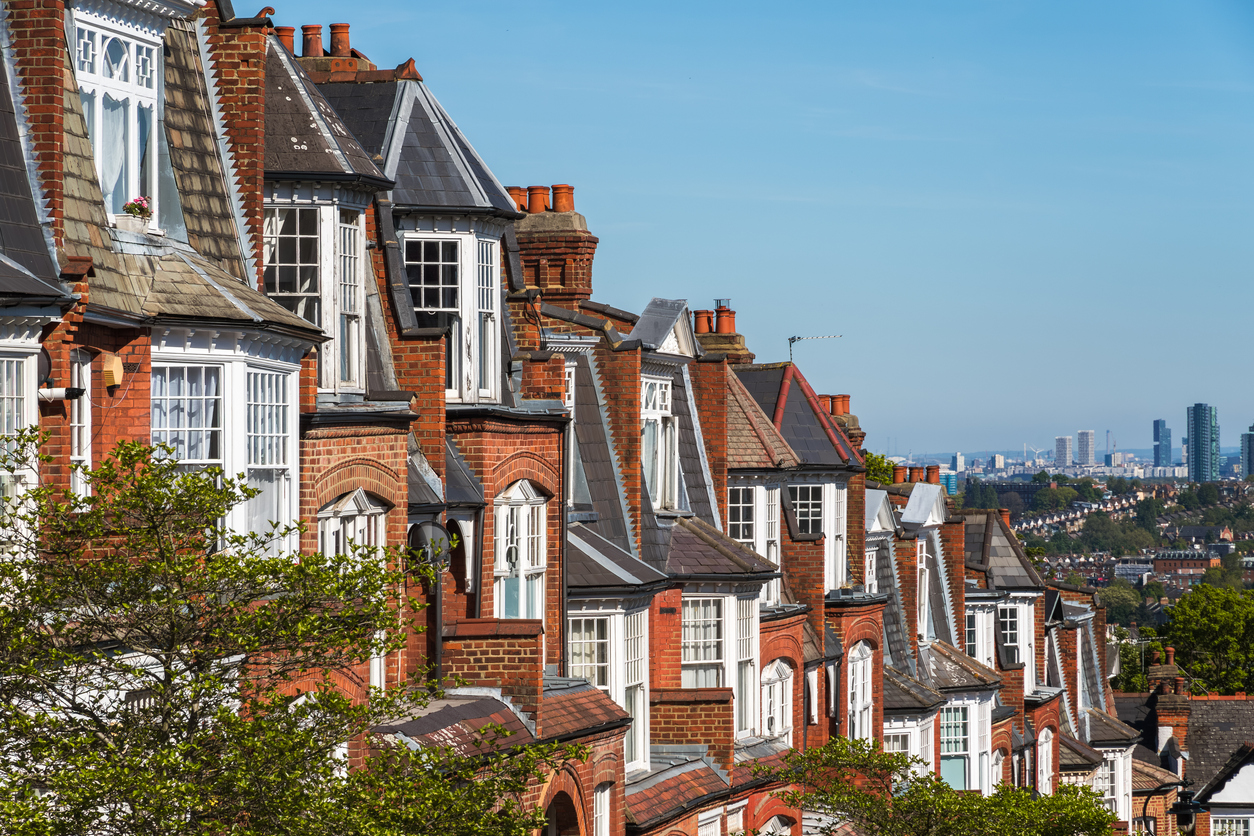
The question of planning permission is one of the first things Richmond homeowners ask when they start thinking about a loft conversion. The good news is that the majority of loft conversions in Richmond do not require formal planning permission. The less straightforward news is that whether yours falls into that category depends on a specific set of rules, and getting it wrong can be costly.
This guide sets out exactly what you need to know about planning permission for loft conversions in Richmond, what permitted development rights allow, where the restrictions are and what the process looks like if your project does require consent.
At SM & Sons Construction we work with a carefully selected number of homeowners across Richmond and south west London each year. Understanding the planning position is one of the first conversations we have with every client, because getting this right at the outset shapes everything that follows.
What Are Permitted Development Rights?
Permitted development rights are a set of pre-approved planning permissions granted by the government that allow certain types of work to be carried out on residential properties without requiring a formal planning application. For loft conversions, permitted development rights cover a significant range of work, meaning that in many cases you can proceed without any involvement from the local planning authority at all.
However permitted development rights are not unlimited. They come with specific conditions about size, height, materials and appearance that must all be satisfied for the rights to apply. If your proposed conversion exceeds any of these limits you will need to apply for planning permission.
Loft Conversions Under Permitted Development in Richmond
Under current permitted development rules a loft conversion can be carried out without planning permission provided it meets all of the following conditions:
The additional roof space created must not exceed 40 cubic metres for a terraced house or 50 cubic metres for a detached or semi-detached house. This limit applies to the total volume added so if any previous loft conversion or roof alteration has already used part of this allowance, the remaining permitted development volume is reduced accordingly.
The extension must not exceed the height of the existing roof at its highest point.
No extension can be built forward of the principal elevation or side elevation fronting a highway.
Side-facing windows must be obscure glazed and non-opening unless the opening part is more than 1.7 metres above the floor level of the room.
The materials used must be similar in appearance to the existing house, so a loft conversion clad in dramatically different materials to the existing property would not satisfy permitted development conditions.
The roof extension must not overhang the outer face of the wall of the original house.
No verandas, balconies or raised platforms are permitted under permitted development rights.
If your proposed loft conversion satisfies all of these conditions it will almost certainly fall within permitted development. However there is an important caveat specific to Richmond that significantly changes the picture for many homeowners.
Richmond’s Conservation Areas and What They Mean for Your Loft Conversion
Richmond upon Thames has one of the highest concentrations of conservation areas of any London borough. Areas including Richmond Town, Kew, Barnes, Ham, Petersham, Twickenham Riverside and many others are designated conservation areas where permitted development rights are either significantly restricted or removed entirely.
Within a conservation area the following specific restrictions apply to loft conversions that would otherwise fall under permitted development:
Any enlargement of the roof that would be visible from a highway is not permitted development and requires planning permission. In practice this means that dormers on the rear of a property in a conservation area may still be acceptable, but anything visible from the street almost certainly requires a formal application.
Side dormers are not permitted development within conservation areas regardless of size.
The materials and appearance of any roof alteration must be considered very carefully. Conservation area planning officers in Richmond apply a high standard of scrutiny to any change to the roofline of a property within their area.
To check whether your property sits within a conservation area in Richmond you can use the Richmond Council planning map at richmond.gov.uk or contact the planning department directly. Given the extent of conservation area coverage across the borough it is genuinely worth checking before making any assumptions.
Article 4 Directions in Richmond
In addition to conservation area restrictions Richmond upon Thames has issued Article 4 Directions in certain areas that further remove permitted development rights. An Article 4 Direction means that works which would ordinarily not require planning permission, including some loft conversion types, do require a formal application within the affected area.
Article 4 Directions in Richmond tend to apply in areas of particular architectural or historic significance. If your property is subject to an Article 4 Direction the local planning authority will be able to confirm this and advise on what consent is required.
Listed Buildings and Loft Conversions in Richmond
Richmond has a significant number of listed buildings. If your property is listed, at Grade I, Grade II* or Grade II, you will need listed building consent for any works that affect the character of the building, including loft conversions. This applies regardless of whether planning permission would otherwise be required and regardless of whether the works are visible externally.
Listed building consent applications are assessed against stricter criteria than standard planning applications and require careful preparation. Works to listed buildings should always involve a specialist architect with conservation experience. An experienced construction company will be familiar with the requirements and able to work constructively alongside the planning process.
When You Do Need Planning Permission for a Loft Conversion in Richmond
Setting aside conservation area and listed building considerations, you will need to apply for planning permission for a loft conversion in Richmond if any of the following apply:
Your proposed conversion would exceed the cubic metre limits for your property type. A hip to gable conversion on a terraced property for example will almost always exceed the 40 cubic metre limit for terraced houses. A mansard conversion typically requires planning permission regardless of property type due to its scale and the change it makes to the roofline.
Your property has already had a previous loft conversion or roof alteration that has used up part or all of the permitted development allowance.
If your proposed conversion includes a balcony, terrace or any other raised accessible platform.
Your property is in a conservation area and the proposed works would be visible from a highway.
Your property is subject to an Article 4 Direction that removes the relevant permitted development rights.
Building Regulations — Always Required
Regardless of whether planning permission is needed, building regulations approval is always required for a loft conversion. Building regulations are entirely separate from planning permission and cover the structural integrity, fire safety, insulation standards, means of escape and staircase design of the conversion.
Building regulations approval is obtained through a formal application to the local authority building control team or through an approved inspector. Your construction company will manage this process and ensure all works are inspected and signed off at the relevant stages, resulting in a completion certificate on practical completion.
This completion certificate is important documentation. Mortgage lenders and solicitors will ask for it when you come to sell the property, and its absence can cause significant complications in a sale.
Prior Approval for Larger Home Extensions
It is worth noting that Richmond, like all London boroughs, also operates a prior approval process for certain larger home extensions that exceed standard permitted development limits. This is not directly relevant to most loft conversions but is worth being aware of if your project involves both a loft conversion and a ground floor extension, as the combination may trigger different planning considerations.
How Long Does Planning Permission For a Loft Conversion Take in Richmond?
If your loft conversion does require planning permission the standard determination period for a householder application is 8 weeks from validation. In practice Richmond’s planning department is generally efficient but complex or sensitive applications, particularly in conservation areas, can take longer.
Pre-application advice from Richmond planning is available and strongly recommended for conservation area projects or anything involving a listed building. A pre-application discussion gives you early clarity on what is and is not likely to be acceptable before you invest in detailed architectural drawings.
The fee for a householder planning application in England is currently £258. Pre-application advice fees vary depending on the nature and complexity of the proposal.
What to Do Before Appointing a Builder
The right sequence for a loft conversion in Richmond is to establish your planning position before appointing a builder and before commissioning detailed architectural drawings. A brief initial conversation with a planning consultant or an architect with Richmond experience will tell you whether your project is likely to fall within permitted development, require planning permission or need listed building consent.
This conversation costs relatively little, certainly compared to the cost of proceeding on an incorrect assumption. We have seen homeowners invest in detailed architectural drawings and structural calculations only to discover that their proposed conversion requires planning permission and that the design needs to change significantly as a result.
Starting with the planning position protects your investment and your timeline.
Loft Conversions Across Richmond and South West London
We work with homeowners across Richmond, Kew, Barnes, Twickenham, East Sheen and the wider south west London area including TW9, TW10, SW13 and SW14. Richmond’s period housing stock, from Georgian villas in Richmond Hill to Victorian terraces in North Sheen and Edwardian semis across Twickenham, presents some of the most rewarding loft conversion opportunities in London when approached with the right care and expertise.
We take on a select number of projects each year, chosen because we know we can do something exceptional with them. If you are considering a loft conversion in Richmond and want to understand your planning position and what is possible for your property, get in touch and let us find out together.