



Of all the ways to add space to a London home, a basement conversion will generate more questions than almost anything else. And understandably so. The subject is genuinely complex, more so than a rear extension or loft conversion, and the decisions made at the outset have a significant bearing on the cost, the programme and the result.
This guide covers everything a London homeowner needs to understand before starting a basement project. Not a surface level overview but the real information. The kind that helps you ask better questions, avoid expensive mistakes and make decisions you will not regret.
The First Question: Do You Have an Existing Cellar or Are You Starting from Scratch?
This distinction matters more than almost anything else in a basement project, because the two types of work are fundamentally different in complexity, cost and planning implications.
If your property has an existing cellar, as many Georgian, early Victorian and later Victorian London properties do, you are starting from a position of genuine advantage. The void already exists. The structural question of how to create it has already been answered by whoever built the house. A cellar conversion works with what is there, improving it to a habitable standard by addressing waterproofing, ventilation, insulation, light and access. It is a significant project but a manageable one for an experienced basement builders in London.
If you have no existing basement and want to create one from scratch, excavating beneath the footprint of the house to create a new level of living space, you are in entirely different territory. This is major structural engineering work, involving sequential underpinning of the existing foundations, controlled excavation beneath a live building, and complex temporary works to keep the structure above safe throughout. It is one of the most technically demanding projects a residential builder undertakes and the costs reflect that.
Understanding which category your project falls into is the essential first step.
Cellar Conversion: What is Involved
A cellar conversion takes an existing underground space and transforms it into a room that meets building regulations for habitable use. The core challenges are water, light and headroom.
Waterproofing
Waterproofing is the most important technical decision in any basement project and it is worth understanding properly. There are two fundamentally different approaches, and they work on completely different principles.
Tanking involves applying an impermeable coating, either a cement-based slurry or a sheet membrane, to the walls and floor, creating a barrier that physically prevents water from entering. It works well where water pressure is low and the structure is in good condition. Its weakness is that if water finds even a small imperfection in the coating, or if the membrane loses adhesion, water gets behind the barrier with nowhere to go and the whole system can fail. Repairs require exposing and reapplying the entire affected area.
A cavity drain membrane system works on a completely different principle. Rather than trying to stop water getting in, it accepts that water will enter and manages it. A dimpled plastic membrane is fixed to the walls and floor, creating a gap between the membrane and the structure behind it. Any water that enters travels down through this cavity and is collected at a drainage channel at the base of the wall, from where it is pumped out or drained by gravity to a sump. The surface you see, the plasterboard, the screed, is completely dry because the water never reaches it.
For most London basement conversions, a cavity drain system is the preferred approach. It is more tolerant of structural movement, easier to inspect and maintain, and does not require the perfect bond that tanking demands. A specialist waterproofing company should design and install the system, and the installation should be backed by a manufacturer’s guarantee and a guarantee from a specialist such as LABC or a similar body.
Headroom
Building regulations require a minimum ceiling height of 2.1m for habitable rooms, measured at the lowest point. Many London cellars fall below this and the only way to achieve the required height is to lower the floor, which involves breaking up and removing the existing floor slab, excavating beneath it and pouring a new slab at a lower level. This is not a minor undertaking. Every additional 100mm of floor lowering is a significant increase in cost and complexity, and the deeper you go the greater the risk of affecting the existing foundation depths.
Before committing to a basement conversion in London the first thing to establish is your existing headroom and how much floor lowering, if any, will be required to achieve a usable ceiling height. If the existing headroom is already close to 2.1m this is straightforward. If the existing cellar has headroom of 1.6m and you want a proper habitable room you are looking at substantial excavation and all the structural implications that brings.
Light and Ventilation
Underground rooms have no natural light and ventilation unless you create it. The most common solution is a lightwell, an excavated void outside the building alongside the basement wall, allowing a window to be installed that looks into the lightwell and brings natural light and ventilation into the space below. Lightwells require their own drainage, a protective grating at street level and careful design to make them feel generous rather than gloomy. A well designed lightwell can transform a basement room from a cave into a genuinely pleasant space. A poorly designed or undersized one achieves little.
Where lightwells are not possible, on the party wall side, or in particularly constrained situations, mechanical ventilation and artificial lighting are the alternatives. Modern LED lighting and high quality mechanical ventilation can create comfortable habitable spaces, but the absence of any natural light will always limit the appeal and value of the room compared to a properly lit basement.
New Basement Excavation: What is Involved
Creating a new basement beneath an existing house is one of the most demanding projects in residential construction. It is not simply a matter of digging a hole. The house is sitting on its foundations, which are bearing on the ground that you need to remove. The challenge is to do this safely, maintaining the structural stability of the house throughout.
The solution is underpinning, a process of progressively transferring the load of the existing foundations onto new, deeper foundations. This approach is used in most London basement projects is sequential mass concrete underpinning or the use of specialist systems such as the Shire Stabilisers. The existing foundation is exposed in sections, new concrete is poured beneath and around it, and the process moves along the foundation one section at a time, never undermining more of the structure than is safe at any given moment. This sequential approach is both time-consuming and requires close structural engineering supervision throughout.
Once underpinning is complete, excavation of the basement void can proceed. The excavated material has to go somewhere, which on a tight London terrace with no rear access means it typically comes out through the front of the house. This logistics problem alone adds meaningful cost and time to a London basement project compared to a property with better access.
The temporary works, the propping and shoring required to keep the structure safe during excavation, are a major cost element that is easy to underestimate from a budget perspective.
Basement Conversion Costs in London
Costs vary considerably depending on the type of project, the condition of the existing structure, the depth of any floor lowering required and the specification of the finished space.
As a broad guide, the current ranges for London basement work are as follows:
A cellar conversion of an existing basement without floor lowering typically costs between £1,500 and £2,500 per square metre. Where floor lowering is required, costs rise to between £3,000 and £3,500 per square metre depending on the depth of excavation needed. A new basement dig on a property with no existing cellar is the most expensive scenario, typically between £4,500 and £7,500 per square metre, and in complex situations with poor ground conditions, difficult access or extensive temporary works, costs can exceed this range.
These figures cover the construction cost, the structural, waterproofing work and the basic fit-out to a habitable shell. The final fit-out cost, the flooring, bathroom, kitchen, joinery and decoration, is additional and varies based on specification in exactly the same way as any other room.
Every additional 100mm of floor lowering adds meaningful cost. Every lightwell that requires highway excavation adds cost. Every party wall that requires a structural engineer’s involvement adds cost. The figures above are starting points for budgeting but a detailed assessment of your specific property and the scope you have in mind is the only reliable basis for a real budget.
Does a Basement Conversion in London Need Planning Permission?
The planning position for basement work in London depends on what exactly is being done and where the property is.
A cellar conversion that involves only internal works, no changes to the external appearance, no lightwell, no excavation beyond the existing footprint, is typically treated as permitted development and does not require planning permission. Building regulations approval is always required regardless. Some councils recommend obtaining a Certificate of Lawful Development to formally confirm permitted development status before proceeding, particularly if you are planning to sell the property in the future.
If the project involves any external changes, a new or enlarged lightwell, works to the front garden, a new entrance, planning permission is almost certainly required. A new basement dig almost always requires planning permission.
London’s planning landscape for basement work has become more complex in recent years. Many boroughs have introduced specific basement policies that restrict depth, limit the proportion of the garden that can be excavated, require drainage impact assessments and set rules on the number of basements permitted in a given street or area. The most restrictive boroughs tend to be those with the most historic housing stock and the highest density of basement works. Kensington and Chelsea, Westminster, Camden and Hammersmith among them. In these areas the planning process for a new basement dig is a substantial exercise in its own right.
Properties in conservation areas face additional scrutiny. Listed buildings require listed building consent for any works that affect the character of the building, which in practice means almost everything involved in a basement project.
The first step before any basement project in London is to establish clearly what the planning position is for your specific property, your specific borough and your specific scope of works. An architect with basement experience in London is the right person to advise on this.
Party Wall Considerations
Party wall implications are one of the most consistently underestimated aspects of basement work in London. The Party Wall Act 1996 requires you to serve formal notice on all adjoining owners before carrying out any excavation within three to six metres of a neighbouring structure, depending on depth. For a basement project in a terraced London street this means virtually every neighbouring property, on both sides and potentially to the rear, will require notice.
Once notice is served the adjoining owner can consent or dissent. If they dissent, or if they do not respond, a party wall surveyor must be appointed. In most basement projects each affected neighbour will have their own surveyor and you as the building owner will typically pay for all of them. In a complex project with multiple affected neighbours, party wall surveyor fees can run to several thousand pounds per neighbour.
A party wall surveyor who acts as the agreed surveyor for both parties is a more economical outcome. But you cannot predict what your neighbours will do. Factor party wall costs into your budget from the outset. They are not optional.
What Makes a Good Basement Conversion
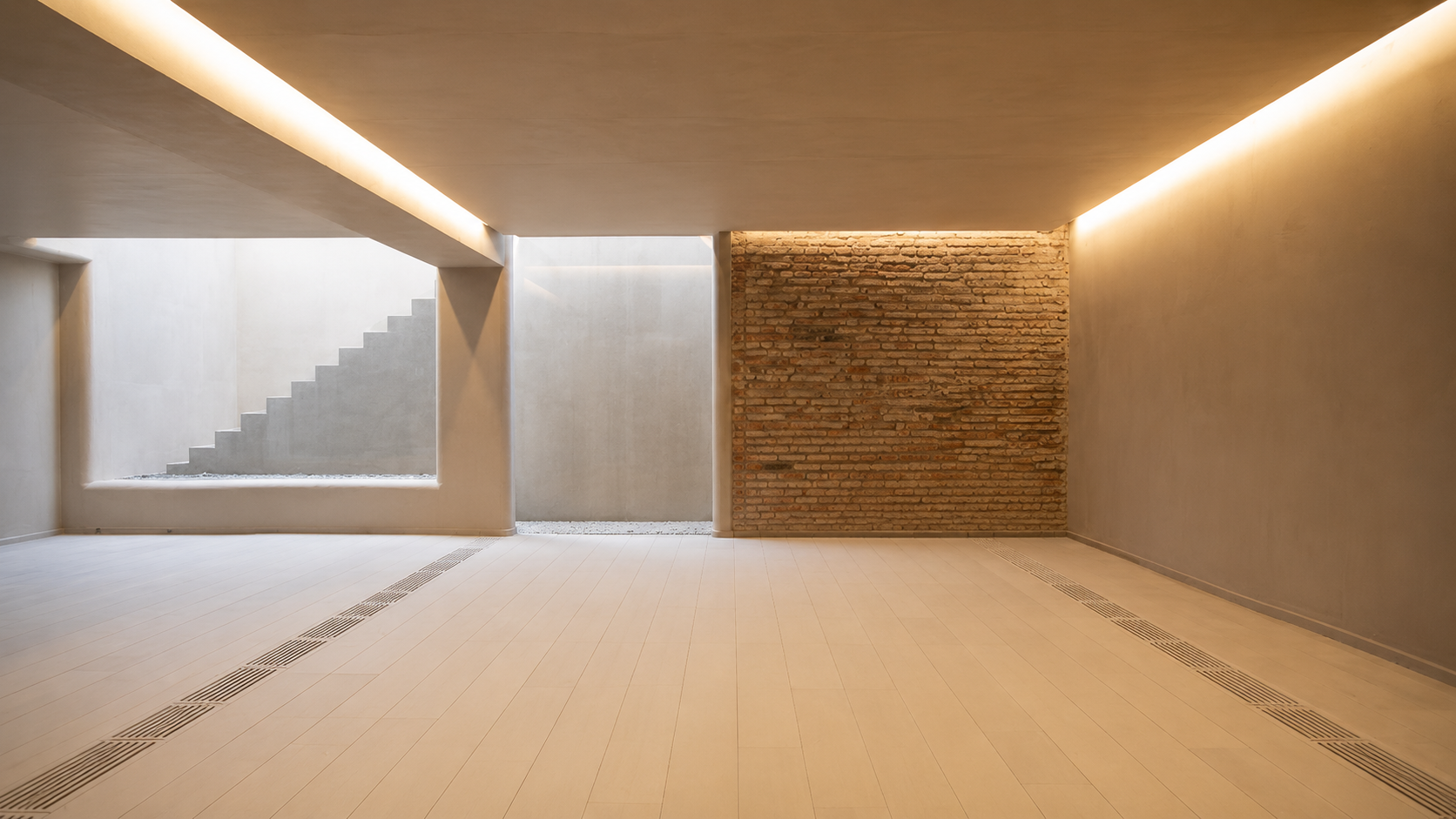
Beyond the technical requirements, the quality of a basement conversion comes down to how well it has been designed as a living space. A basement that feels like a basement, low, dark, tunnel-like, is a failure of design regardless of how well it was built. A basement that feels like a genuinely great room, warm, well-lit, with considered proportions and proper connection to the rest of the house, is a success.
The elements that determine which outcome you get are the quality of natural light provision, the ceiling height, the staircase design and how the basement connects to the ground floor, the ventilation and the specification of the finishes. A well-designed lightwell is worth investing in. A generous ceiling height is worth the cost of the additional floor lowering. A properly designed staircase that is architecturally considered rather than purely functional makes an enormous difference to how the space feels.
The best basement conversions we have worked on are the ones where the structural and technical requirements were resolved early, the design was properly developed before work started and the specification was clear from the outset. They are complex projects but they produce some of the most remarkable results available to a London homeowner.
Is a Basement Conversion In London Worth It?
The honest answer is that it depends. For the right property in the right location with the right scope it is one of the best value-adding projects available. A well executed basement conversion in south west London can add between ten and thirty percent to property value and creates living space that simply cannot be created any other way in a dense urban environment.
For properties where the basement potential is more marginal, limited headroom, complex ground conditions, difficult access, a conservative planning authority, the cost-benefit calculation requires more careful analysis. The project costs are what they are. The value uplift depends on the market, the quality of the result and how well the space serves the needs of whoever lives there.
The question to ask is not whether basement conversions are generally worth it but whether this basement conversion, in this property, to this specification, at this budget, is the right decision for you. That question requires a specific assessment, not a general answer. A basement construction company in London can help you through this.
Thinking About a Basement Conversion in London?
We work with homeowners across south west London and beyond on projects that require genuine technical expertise and a considered approach. Basement conversions, whether converting an existing cellar or undertaking more extensive works, are among the most technically demanding residential projects and require a builder who understands both the structural and design challenges involved.
We take on a select number of projects each year and give each one our full attention. If you are considering a basement conversion in London and want an honest assessment of what is involved, what it is likely to cost and whether it is the right decision for your property, we would be happy to have that conversation.